
Expanding beyond your home market is exciting and full of opportunity. Whether you sell DTC or wholesale, learning the systems for cross-border commerce prevents costly mistakes and speeds growth. In this article you'll find an actionable blueprint for how to sell products internationally online, with practical steps, common pitfalls, and quick wins for early-stage eCommerce brands.
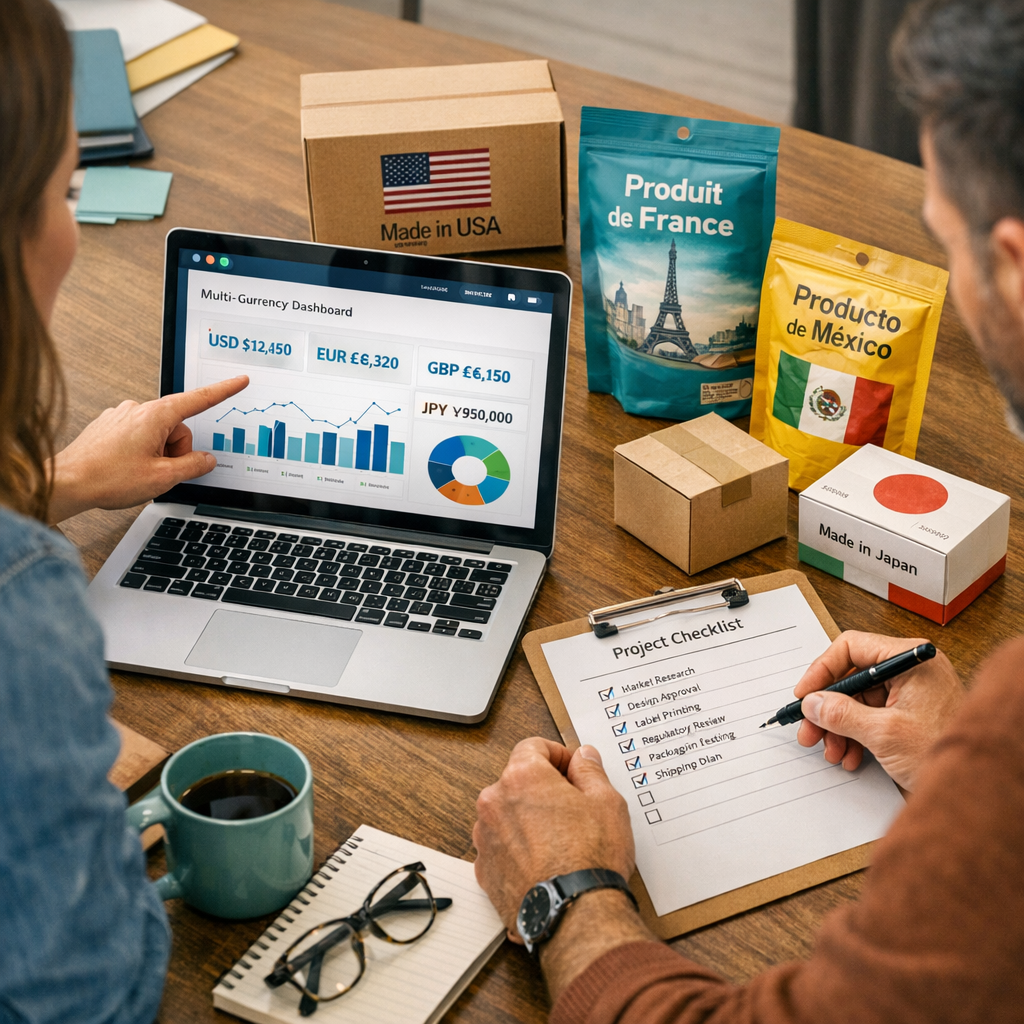
Why sell internationally now
Global demand can multiply your growth runway, reduce dependence on a single market, and let you scale inventory turns faster. Here’s the thing, though, cross-border selling adds complexity: localization, taxes, shipping, returns, and marketplace rules. Start with a clear market-entry plan and you’ll avoid the most common mistakes.
How To Sell Products Internationally Online: A Practical Checklist
Follow these eight steps to move from idea to revenue in a new market.
1. Pick the right market first
- Look for markets with demand for your product category and manageable logistics. Consider language, cultural fit, purchasing power, and competitive landscape.
- Start with one or two target countries to keep operations simple.
2. Choose the best sales channels
- Direct-to-consumer on your site using international storefronts or multi-currency checkout.
- Major global marketplaces where your category performs, such as a regional marketplace or well-known global platforms.
- Wholesale partnerships or local distributors for complex regulatory categories.
3. Localize product pages and UX
- Translate product copy and labels, localize sizing, units, and imagery.
- Offer local currencies and familiar payment methods to reduce friction.
- Show local shipping times, duties, and returns policy up front.
4. Price for landed cost, not just product cost
- Calculate landed cost: product + international shipping + duties + taxes + platform fees.
- Decide whether to prepay duties and taxes or display Delivered Duty Paid (DDP) versus Delivered At Place (DAP) options.
5. Setup compliant taxes and customs
- Register for VAT or equivalent where required, and collect accurate tax at checkout.
- Prepare HS codes, commercial invoices, and compliant product labeling.
- Work with a customs broker or an experienced 3PL for first shipments.
6. Build a logistics and returns workflow
- Decide between international fulfillment, local warehousing, or a hybrid approach.
- Choose carriers with reliable tracking and clear pricing for returns.
- Create a simple returns policy tailored to the market that balances customer trust and cost control.
7. Market with local channels and proof points
- Use paid search, social ads tailored to the region, and platform-native advertising if selling on marketplaces.
- Leverage local social proof, reviews, and influencers to build trust quickly.
- Translate and A/B test creative; cultural nuance matters.
8. Measure, iterate, and scale
- Track conversion rates by market, average order value, landed cost margin, and return rates.
- Run small experiments on pricing, shipping offers, and ad creatives before scaling spend.
- Use analytics to decide when to add more products or invest in local inventory.
Quick operational templates (what to set up day one)
- Local storefront or multi-currency checkout
- International shipping rules and a carrier contract
- Tax and VAT registration checklist for target markets
- Standardized labeling and commercial invoice template
- Returns processing SOP for cross-border orders
Common objections and how to handle them
- "It’s too complicated." Start with one country and use a partner 3PL or marketplace to simplify fulfillment.
- "Margins will be squeezed by shipping and duties." Price for landed cost and consider pockets of higher AOV where margins hold.
- "Customer service will be hard." Use multilingual CS templates, tools for auto-translation, and hire part-time local support as volume grows.
Cost-saving approaches for early-stage brands
- Use drop-shipping or partner fulfillment in-market to avoid high inventory commitment.
- Offer premium shipping tiers for fast delivery while keeping a lower-cost standard option.
- Batch shipments to a regional 3PL to reduce per-unit freight.
Metrics to watch (besides revenue)
- Landed margin per order
- Conversion rate by country and channel
- Average order value and customer acquisition cost by market
- Return rate and time-to-fulfill
Frequently Asked Questions
How much does it cost to start selling internationally?
Costs vary by market and model. Expect one-time costs for localization, initial tax registrations, and compliance, plus ongoing costs for shipping, duties, and platform fees. Use a landed-cost calculator to estimate per-order profitability before you launch.
Which markets are easiest for U.S.-based brands to enter?
Nearby markets with shared language or similar consumer behavior are easiest. Many brands start with English-speaking countries or markets with strong eCommerce infrastructure and reliable logistics.
Do I need to register for VAT or local taxes?
Often yes. Many countries require tax registration when you reach a sales threshold or when using local fulfillment. Consult a tax advisor or compliance partner for specifics.
Should I use marketplaces or sell only on my website?
Both approaches work. Marketplaces give instant reach and simplified fulfillment options but come with fees and brand constraints. Your site gives full brand control and higher margins, especially if you can support local payments and trust signals.
How do I handle returns from another country?
Set clear returns policies, partner with carriers that offer returns services, or route returns to a regional hub. For low-value items, consider offering store credit instead of return shipping.
What payment methods should I offer?
Offer local preferred methods: credit cards, digital wallets, and region-specific options like buy-now-pay-later where popular. Multi-currency pricing reduces checkout friction.
How long before I see meaningful sales in a new market?
With the right product-market fit and marketing, you can see initial sales within weeks on marketplaces, and in 2-3 months on your own site with targeted campaigns. Meaningful scale typically takes several quarters.
Ready to expand internationally?
If you want a faster, safer path to new markets, consider a partner who combines market-entry strategy, marketplace optimization, regulatory support, and analytics-led growth. Learn how SELL GOAL helps brands enter and scale in international markets by visiting https://www.sell-goal.com. Start with a short discovery call and a tailored market plan.
Conclusion
Selling products internationally online is one of the fastest ways to scale an eCommerce business, but success depends on preparation. Focus on one market at a time, price for landed cost, localize the customer experience, and measure the right metrics. Start small, learn quickly, and reinvest in the markets that prove profitable. With the right process, cross-border growth becomes predictable and repeatable.